



Trail damage to Bronco paint comes from three sources: pinstriping (branch scratches down the sides), rock rash (chips and gouges low on the body), and abrasion (mud and sand acting like sandpaper). You cannot avoid all three and still leave the driveway, but you can decide where the damage lands: on sacrificial layers like vinyl and wax, or on the paint Ford charged you for.
Here is where each kind of damage happens, how to prevent what is preventable, and where vinyl earns its keep.
What causes trail pinstriping and can you prevent it?
Pinstriping is the fine scratching that branches and brush drag down your doors and fenders on narrow trails. Prevention is mostly line choice: slow down in the tight stuff, tuck your mirrors, and accept that a truck 76 inches wide will touch things a stock crossover will not. A hard wax or ceramic coating helps light scratches buff out instead of sticking, and vinyl on the most exposed surfaces takes the scratch itself. Many light pinstripes will actually polish out of clear coat; deep ones that catch a fingernail will not.
Where does rock rash hit a Bronco?
Low and behind the tires. The rocker panels under the doors, the lower rear quarters, and the trailing edges of the fenders take thrown gravel constantly, and bigger tires throw more of it, harder. This is the zone where paint protection stops being cosmetic and starts being maintenance:
- Rocker panels: the single most abused paint on the truck. Vinyl coverage here is the classic move because it takes both boot scuffs and rock spray, and peels off ugly instead of your paint chipping ugly.
- Behind the wheels: mud flaps or a wider fender flare cut the spray pattern.
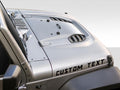
- The hood's leading edge: highway speed chips more than trails do. A hood decal covers the kill zone.

Sacrificial vinyl exactly where the trail hits first. When it finally looks battle worn, peel it and lay a fresh one on factory paint.
How should you wash a Bronco after off-roading?
Wrong washing does more paint damage than most trails. The rule: float the grit off before anything touches the paint.
- Rinse first, thoroughly. Pressure wash the mud off from a distance, including wheel wells and rockers, before any mitt touches the truck. Rubbing dry mud is sanding.
- Underbody too. Mud packed in the frame holds moisture against metal; rinse it out, especially after salt or beach driving.
- Two buckets, clean mitt. Wash top down with a rinse bucket so grit does not recirculate.
- Skip the automatic brush wash. Those brushes carry the last hundred vehicles' grit.
- Re-wax the sacrifice layer a few times a year. Wax scratches so clear coat does not.
Vinyl surfaces wash the same way; the details are in our graphics care guide.
Where does vinyl actually save you money?
Body shop pricing varies a great deal by region, shop, and paint code, so treat the figures below as rough orders of magnitude rather than quotes. The point is the ratio, not the exact number: on these four panels, the vinyl is consistently a fraction of the refinish.
| Panel | Threat | Vinyl fix | Typical refinish cost |
|---|---|---|---|
| Rocker panels | Rock spray, boot scuffs | Rocker stripe kit | Several hundred dollars per side |
| Hood | Chips, sun fade, glare | Blackout hood decal | Often the most expensive single panel |
| Fender tops | Gear scratches, brush | Fender decals | A couple hundred each |
| Lower doors | Pinstriping | Side graphics kit | Several hundred per side |
Two notes on quality. Laminated vinyl carries a clear layer over the print that takes UV and abrasion first, which is exactly what you want on a trail truck; we explain the difference in why some graphics are laminated. And any vinyl beats no vinyl on these panels: the decal is always cheaper than the respray it prevents.

Covers the hood's chip zone, kills glare into the upright windshield, and looks factory tough doing it.
Frequently asked questions
Does trail pinstriping come out of Bronco paint?
Light pinstriping that stays in the clear coat usually polishes out with a dual action polisher. Scratches deep enough to catch a fingernail are through the clear and need touch up or repaint.
Is vinyl better than ceramic coating for off-road use?
They solve different problems. Ceramic helps light scratches and makes washing easier; it does not stop rocks. Vinyl physically absorbs chips and scuffs on the panels that take impacts. Trail trucks benefit from both: ceramic everywhere, vinyl on the strike zones.
Will removing protective vinyl damage the paint?
No, not when removed with heat and patience. Factory paint under quality vinyl comes out as it went in, often better preserved than the exposed panels around it. See our decal removal guide.
What is the first panel I should protect on a new Bronco?
The rocker panels. They take damage from both sides, trail spray below and boots above, and they are the most expensive cosmetic repaint on the lower body.
Let the vinyl take the hit
Protective and custom Bronco graphics, precision cut by a veteran-owned shop in South Carolina, cutting decals since 2009.
Shop Bronco decals ›
0 comments