



Spend enough time around Jeep graphics, and you start to notice a word that shows up on some products but not others: laminated. It sounds like packaging jargon, but that clear layer is doing real work, and it is one of the main reasons a printed graphic can live on your hood through years of sun and car washes. Here is what the laminate actually does, why a printed graphic needs it, and why a solid color cut vinyl decal gets along just fine without it.
What the clear layer actually is
A laminate is a thin, clear, self-adhesive film applied over the top of a printed graphic. Picture a printed design as three layers stacked together: the vinyl base at the bottom, a layer of ink printed onto it in the middle, and the clear laminate sealed over the top. That ink is the whole design, and on a printed graphic it sits right on the surface where the weather can get to it. The laminate is the shield that stands between your artwork and the outside world.
Without it, the ink would face the sun, road grit, and rain directly. With it, all of that hits the sacrificial clear layer first. You are not looking at the ink anymore when you run your finger across a laminated graphic. You are touching the laminate.
What lamination actually protects against
The clear layer earns its keep in three honest ways, and it is worth being precise about them rather than promising the moon.
UV protection. Sunlight is what fades a printed graphic. The laminate absorbs and blocks a large share of the UV before it reaches the ink, so colors stay truer for longer. This is the single biggest reason we laminate.
Abrasion resistance. Car wash brushes, wind-blown grit, a stray branch on the trail, and the general scuffing of daily driving all wear on a surface. The laminate takes that wear so the ink does not.
Moisture resistance. Sealing the top edge of the print helps keep water and humidity from working into the ink layer over time. It is genuine protection against the elements, and we will leave it at that. A laminate is not a coat of armor, it is not reflective, and it does not turn a graphic into a safety device. It is a clear film that helps your print age gracefully, and that is plenty.
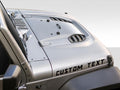
Every printed graphic we make, from a full side hood design to a steering wheel overlay, ships with that protective laminate already on it. These two are good examples of printed and laminated graphics done right.


Why a printed graphic needs it but a cut vinyl decal does not
Here is the part that trips people up. If lamination is so good, why are so many decals not laminated? The answer comes down to how the two kinds of graphics are built.
A cut vinyl decal, like a trail-rated badge or a simple shape, is made from solid colored vinyl. The color is the material itself, running all the way through the sheet from top to bottom. There is no ink sitting on the surface to protect, so a laminate would add cost and thickness without adding meaningful life. We cut our solid color decals from ORACAL 651, which is rated around 6 years outdoors on its own, and we finish them with transfer tape rather than a laminate. The color-through construction is the protection.
A printed graphic is a different animal. To reproduce a photo-real island scene or a multi-color flag, the design has to be printed as ink onto a white vinyl base. Now there is a surface ink layer, and that layer needs defending, so a laminate goes on top. Same idea, two constructions: one carries its color inside, the other wears it on the surface and seals it in. If you want to go deeper on how the base films differ, our guide to cast and calendered vinyl breaks that down.
Why we quote 3 to 6 years instead of a bigger number
Our printed graphics are printed and finished right here in South Carolina on ORAJET 3551RA vinyl with a protective laminate, and we rate them at 3 to 6 years outdoors depending on climate and sun exposure. That range is not us being modest. It is what the material actually delivers, and it lines up with the manufacturer spec, where a printed and laminated graphic runs from roughly six years in a mild climate down to about two years under relentless sun.
You will see other sellers quote five to eight years on graphics without ever mentioning whether there is a laminate at all. We would rather tell you the truth about what the clear layer does and give you a number you can plan around. The laminate is exactly why we can state a realistic outdoor life instead of an inflated one. Honest specs beat pretty ones when it is your hood on the line.
Getting the most life out of the laminate
A laminate does its job on its own, but a little care stretches those years. Hand washing is gentler than a stiff automatic brush, and giving a fresh graphic a couple of days to bond before its first wash helps the whole stack settle. Our full walkthrough on caring for your Jeep decals covers the details, and if steering wheel overlays are your thing, the five things to know before you buy guide is worth a read first.
When you are ready, our decals ship within 7 business days, and orders over $59.99 ship free. Whether you go with a solid cut vinyl badge or a fully printed and laminated hood graphic, you will know exactly why one has that clear layer and the other does not.
Frequently asked questions
Why are some Jeep graphics laminated?
Lamination adds a thin clear film over the printed ink. On a printed graphic the color sits on the surface of the vinyl, so that clear top layer shields it from UV rays, light abrasion, and moisture. It is the difference between a print that holds its color outdoors and one that fades quickly, which is why every printed graphic we make is laminated.
How long do laminated printed decals last outdoors?
Our printed graphics are built on ORAJET 3551RA vinyl with a protective laminate, and we rate them at 3 to 6 years outdoors depending on your climate and sun exposure. A Jeep parked in shade in a mild climate lands at the top of that range, while daily desert sun sits nearer the bottom.
Do printed graphics fade over time?
Every printed graphic fades eventually because sunlight slowly breaks down ink, but the laminate slows that down considerably by blocking much of the UV before it reaches the ink. Without a laminate a printed graphic would fade far sooner, which is exactly why we never skip that step.
What is the difference between printed vinyl and cut vinyl?
A printed graphic has its design jetted onto white vinyl as a layer of ink, so it needs a laminate on top to protect that ink. A cut vinyl decal is made from solid colored vinyl where the color runs all the way through the material, so there is no surface ink to protect and no laminate is needed.
Do solid color cut vinyl decals need a laminate?
No. A cut vinyl decal is made from ORACAL 651, a solid colored film where the color runs through the whole sheet, so there is nothing on the surface for a laminate to protect. These decals already last around 6 years outdoors on their own, which is why we do not laminate them.
0 comments