



The Jeep's 7-slot grille is one of the most recognized shapes in automotive history. The short answer: Willys-Overland switched from a 9-slot grille on the WWII military Jeep to 7 slots on the first civilian CJ-2A in 1945, largely to create a proprietary design Ford could not claim. Jeep has since registered the 7-slot design as a trademark and defended it in court against multiple automakers. The "7 continents" explanation you have probably read is a popular story, not the official one. Here is the full history.
In this article
- Why 7 slots: the short answer
- Where the Jeep grille came from: the WWII Willys MB
- How Willys went from 9 slots to 7
- Is the "7 continents" story true?
- Why Jeep fights to protect the 7-slot grille
- How Jeep owners personalize the grille today
- Frequently asked questions
Why does the Jeep grille have 7 slots?
The WWII Willys MB used a 9-slot grille. So did the Ford GPW, the other manufacturer building Jeeps for the U.S. Army under the same government contract. When WWII ended and Willys-Overland started selling civilian Jeeps, they needed a design that was distinctly theirs. The CJ-2A, released in 1945, arrived with 7 slots instead of 9. Willys filed for trademark protection on the design, and the 7-slot grille became one of the most closely guarded pieces of automotive intellectual property in history.
The number 7 was not chosen for symbolic reasons. It was chosen to be different from Ford's 9-slot design and to give Willys a defensible trademark. Everything else came later.

Custom vinyl skin that fits the factory 7-slot grille face on 2018-2023 models. No drilling, fully removable.
Where did the Jeep grille design come from?
The Jeep itself was built under pressure. In 1940, the U.S. Army issued a spec for a light reconnaissance vehicle and gave manufacturers just 49 days to deliver a working prototype. Willys-Overland, Ford, and Bantam all responded. Bantam built the first prototype; Willys and Ford refined the design and won the main production contracts.
The early production grilles from both Willys and Ford were flat-faced stamped steel with slots, designed to let air reach the radiator while protecting the nose. Both used 9 slots. The grille was purely functional: keeping the engine cool in conditions the vehicle was never designed to escape.
That 9-slot design served the military through North Africa, Europe, and the Pacific. When the war ended, Willys had every incentive to commercialize the Jeep for the American civilian market. But the front-end design, as it stood, was shared with Ford.
How did Willys go from 9 slots to 7?
When Willys-Overland released the CJ-2A in 1945, the grille changed from 9 slots to 7. The grille also shifted from a flat stamped face to a slightly more rounded shape. Both changes were deliberate moves to set the civilian model apart from the military vehicle and from any future Ford designs that might use the same 9-slot configuration.
Willys trademarked the 7-slot grille as registered trade dress. That trademark has survived every ownership change in Jeep's history: American Motors Corporation in 1970, Chrysler in 1987, DaimlerChrysler in 1998, Cerberus Capital in 2007, Fiat Chrysler Automobiles in 2014, and Stellantis in 2021. The companies changed; the trademark did not.
Today the 7-slot grille appears on every Jeep model, from the entry-level Renegade to the Gladiator pickup. It is the most consistent design element in the brand's history and one of the most litigated design elements in the entire auto industry.

Is the "7 continents" story true?
The claim is that Jeep chose 7 slots to represent the 7 continents, symbolizing that the vehicle can go anywhere on earth. This explanation shows up in Jeep forums, enthusiast sites, and occasionally in brand marketing. It is a good story.
It is not the documented reason.
Jeep's official corporate history traces the 7-slot grille to the 1945 CJ-2A and describes it as a proprietary design element and trademark. The "7 continents" explanation is folk history the community attached to the design after the fact. Jeep has used the "every continent" idea in marketing, but that brand storytelling was built around the existing number, not the reason the number was chosen in the first place.
This is how great brand elements often work: the origin is practical (trademark differentiation), and the mythology builds later. The 7-slot grille earned its symbolism through 80 years of Jeeps doing extraordinary things on every terrain on earth.

Full-coverage American Flag vinyl overlay for the JL Wrangler and JT Gladiator grille. Ships ready to apply.
Why does Jeep fight so hard to protect the 7-slot grille?
Because it is legally valid trade dress, and Stellantis has won or forced settlements in multiple cases:
- Mahindra Roxor (2020): FCA sued Mahindra over its Roxor off-road vehicle, which featured a slot grille Jeep argued infringed its trade dress. The U.S. International Trade Commission issued an exclusion order blocking the Roxor's import.
- Ineos Grenadier (2021): Stellantis sued Ineos in European courts over the Grenadier's grille design. The case settled, and Ineos modified the front end before full production.
- Smaller brands across Asia, South America, and Europe have received cease-and-desist notices for grille designs that echo the 7-slot pattern.
The enforcement pattern is consistent: Stellantis will litigate, and the trademark is strong enough that challengers modify their designs or settle. If you have ever wondered why no mainstream vehicle has a front end that looks like a Jeep, it is because Jeep's legal team makes sure it stays that way.

M81 Woodland camouflage pattern vinyl skin for the 2018-2023 JL Wrangler and JT Gladiator grille.
How do Jeep owners personalize the 7-slot grille?
The grille is the face of the vehicle and one of the first things anyone sees, which makes it a natural target for customization. The most popular options:
- Grille skin overlays: Full vinyl overlays that cover the factory grille face in a custom color, pattern, or graphic. The vinyl conforms to the grille's shape without any drilling or hardware. Jeep Decal Store produces grille skin overlays for JL Wranglers, JT Gladiators, JK Wranglers, and JKU models.
- Painted grilles: Some owners pull the grille and spray it a contrasting color, often picking up an accent from trail armor or a lift kit.
- Aftermarket grille inserts: Third-party inserts swap the factory plastic for mesh or billet material. The 7-slot trademark protects the silhouette as a brand identifier, not the specific material of your own grille.
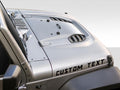
- Complementary decals: Many owners pair a grille overlay with matching hood graphics or fender vent decals for a cohesive front-end look.
The vinyl overlay is the most popular choice because it installs in under 30 minutes, leaves no permanent mark on the vehicle, and can be changed whenever the owner wants a new look.


Custom vinyl grille skin for 2006-2018 JK and JKU Wranglers in a bold orange and yellow Candy Corn pattern.
Ready to put your stamp on the most iconic grille in automotive history?
Jeep Decal Store's grille skin overlays fit the factory 7-slot grille face exactly. No drilling. No hardware. Ships ready to apply.
Shop All Grille Skins →Related reading: the full history of the Jeep from WWII Willys to the modern Wrangler, and the hidden Easter eggs molded into every modern Jeep.
Frequently asked questions
Did the original WWII Jeep have a 7-slot grille?
No. The original WWII Willys MB and Ford GPW both had 9-slot grilles. Willys-Overland switched to 7 slots when they launched the first civilian Jeep, the CJ-2A, in 1945. The change was made to create a design Willys could trademark separately from the shared 9-slot military version.
Why exactly 7 slots and not 6 or 8?
There is no official explanation for choosing 7 over any other number. The primary goal was to differ from Ford's 9-slot design. Seven was distinctive enough to register as trade dress. The exact number likely reflected styling judgment alongside legal strategy rather than any specific symbolism.
Is the Jeep 7-slot grille actually trademarked?
Yes. The 7-slot grille is registered trade dress in the United States and in many international markets. Stellantis, the current owner of the Jeep brand, actively enforces the trademark and has won exclusion orders and court settlements against multiple automakers, including Mahindra and Ineos.
What does the 7-slot grille represent?
Officially, it is a trademarked design element that distinguishes Jeep vehicles from every other automaker. The broader Jeep community has adopted the "7 continents" explanation, which says the slots represent the Jeep's ability to traverse every continent on earth. That story is community mythology rather than the documented origin, but it captures what the design has come to mean over 80 years.
Can you change the grille on a Jeep Wrangler?
Yes. Aftermarket grilles, grille inserts, and vinyl grille skin overlays are all popular modifications. The 7-slot trademark protects the overall silhouette as a brand identifier, not your ability to customize your own Wrangler. Grille skins are the easiest option: they apply directly over the factory grille, require no drilling, and are fully removable.
When did the 7-slot grille first appear on a Jeep?
The 7-slot grille debuted on the Willys CJ-2A in 1945, the first Jeep sold to the civilian public after World War II. Every civilian Jeep model since has carried the same 7-slot design, making it an unbroken design element spanning more than 80 years.
0 comments