


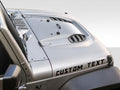

You have seen the phrase. It goes on decals, tailgates, spare tire covers, and about half the Jeep accounts on Instagram. Take the road least traveled.
Two things about it are worth knowing. The poem is called The Road Not Taken, not The Road Less Traveled, and the line is "the road less traveled by." And the poem is not really about adventure. Two stanzas before that famous ending, Robert Frost writes that the passing there had worn the two roads "really about the same." The speaker picks one, then spends the rest of his life telling the story as though it meant something.
Frost knew people were getting it wrong. His biographer, Lawrance Thompson, recorded him warning an audience before a reading, "You have to be careful of that one," and calling it a tricky poem.
Which is honest, because most of us print the phrase on the back of the Jeep and then drive the same four routes to work.
The road least traveled is not in Moab. It is a county road about four miles from your house that you have driven past two hundred times. Here are five things you can do about that, starting with one you could do in the next hour.
1. Take the road you have never turned down
Not a trail. A road. There is one near you, paved or not, that you pass every week and have never driven. Go Saturday morning, early, with no destination and no time you have to be back.
Three practical things, because the point is to enjoy it and not to call somebody for a ride. Start with more fuel than you think you need, since the interesting roads tend to be the ones without a gas station. Know roughly how you are getting home. Tell somebody where you went.
Here is the part worth paying attention to: the vehicle changes the road. A TJ on a washboard dirt road makes you feel every inch of it, and you will be doing thirty and gripping the wheel. A 392 will carry you down the same road fast enough that you barely notice it. Same road, two completely different mornings. If you have access to more than one rig, drive the same road in both sometime and see what I mean.
If the road turns into something more than a road, that is a different outing with different rules. Our beginner's guide to off-roading covers where the line is, and the trail etiquette piece covers how to behave once you cross it. Legal access first, always. A closed trail stays closed because somebody drove it when it was wet.
2. Leave a duck
Costs nothing, takes ten seconds, and it is the only item on this list that makes a stranger's day instead of yours.
If you are new to it: you put a rubber duck on another Jeep, usually the mirror or the door handle, as a compliment. No note required, though most people leave one. There is no committee and no rule book. We wrote up where the tradition came from and how it actually works, and the same instinct is behind the Jeep wave, which costs even less.
The only etiquette that matters: do not put anything under a wiper where it will scratch paint, do not leave one on a Jeep that is clearly somebody's work vehicle at a job site, and keep a few in the console so you are never caught without one. Ours live in a cupholder and get restocked about once a month.
3. Take somebody who has never ridden in one
This is the one people skip, and it is the best thing on the list.
Most people have never been in a Jeep. Not a Grand Cherokee on the highway, an actual open one, with the doors off and the wind coming through sideways. Your neighbor has not. Your kid's friend has not. Your mother almost certainly has not.
Take one of them for twenty minutes. You do not need to go anywhere. The first time somebody rides in an open Jeep, their face does something you cannot get from a photo, and you remember why you put up with the road noise and the fuel economy and the door hinges.
Bring somebody along on the drive from the first item and you have combined two of these into one Saturday. If the photos come out well, Rig of the Month is always open.
4. Change what you stare at all day
You spend a lot of time looking at the hood of your Jeep in photos, and a great deal more time looking at the dashboard, the steering wheel, and the visor in front of you. Most build money goes to the part you see least.
Interior pieces are the cheapest change you can make to how the Jeep feels from the driver's seat, and they take a few minutes with no tools. A dash insert, a steering wheel overlay, a shifter, a visor graphic. Most of it sits under thirty-five dollars, which is less than a tank of fuel for the road in item one.
We make these, so take the recommendation with that in mind. The dashboard decals and steering wheel graphics are where most people start. If you want something nobody else has, the steering wheel overlay can be made with your own text.
5. Find your people, or start the group yourself
Join a local Facebook group, and make it a local one. The national groups are mostly arguments about tire size. A county or metro group is where you find out which gate is locked this month, who has a winch, and when the next breakfast run is.
Now the part almost nobody says out loud. If your area does not have a group, start one. Most areas do not have one. There is no approval process, no fee, and nobody is going to stop you.
What it actually takes: a name with your town or county in it so people can find it, a cover photo of your own rig, three people you already know, and one date on the calendar. Pick a parking lot and a Saturday morning. Four Jeeps is a meetup. The first one is always small, and that is fine.
If you would rather join something that already exists, our events calendar lists shows, trail runs, and club events, and you can add one yourself if yours is missing. For a longer-term target, Badge of Honor gives you an actual list of trails and something to show for running them.
Frequently asked questions
Do I need a lifted Jeep to do any of this?
No. Four of the five need nothing but the Jeep you already own, and the fifth needs about thirty-five dollars. A stock Jeep on street tires can drive every maintained dirt road in this article.
Is it legal to drive on any dirt road I find?
No. Plenty of dirt roads are private, and some public ones are seasonal or closed to certain vehicles. Check before you turn in. A county road map or a Forest Service motor vehicle use map will tell you, and both are free.
What do I do if somebody leaves a duck on my Jeep?
Keep it, or pass it on to another Jeep. There is no obligation either way. Many people keep the first one on the dash and pass the rest along.
How do I find a local Jeep group?
Search Facebook for your county or metro name plus "Jeep" or "4x4," and check for a club at the nearest off-road park. Local shops and trail parks usually know who runs what.
Do I need permission to start a Jeep group?
No. A Facebook group takes about two minutes to create and costs nothing. The only thing you need is a first date on the calendar and a few people willing to show up.
The build is never finished
That was never the point. There is always another bumper, another set of tires, another thing on the list before the Jeep is ready. It will not be ready. Mine is not ready, and I have been at this a long time.
Frost's two roads were worn about the same. What made one of them the road less traveled was that he took it, and then he told the story. Go find a road, take somebody with you, and leave a duck on the way.

0 comments