



Good recovery gear is expensive, and that price tag talks a lot of new overlanders into heading out with nothing but a tow chain and good intentions. That is the wrong trade. A rated budget kit gets you home. No kit, or the wrong kit, is what turns a stuck rig into an injury.
This packout is built around Harbor Freight because it is the one store most people can drive to this weekend with a few hundred dollars. It is split into three tiers so you can stop at the level your budget allows and add the rest later. Most of the tools, camp, and safety gear below is gear we bought ourselves, and the recovery pieces are the BADLAND line most beginners start with. Prices are what it cost at Harbor Freight in September 2026, and they move with sales and coupons, so treat any deal as a bonus, not the plan.
Tier 1, get-unstuck kit: $235.90
Tier 1 + 2, add camp and safety: $451.80
All three tiers: $901.75
The one rule before you buy anything: rated or nothing
Every strap, shackle, and rope you use to pull a vehicle should tell you its working load limit, the load it is rated for in normal use. Better gear also lists a minimum breaking strength, the point the maker tested it to failure. If a piece of recovery gear doesn't print a rating on the label or in the listing, it hasn't earned a place in your rig.
The BADLAND snatch strap in Tier 1 passes that test: the listing gives a 10,000 lb. working load limit. Read the tag on every shackle the same way before it goes in the cart. The catch is that the strap listing does not publish a minimum breaking strength, which premium brands do. For a first kit, that is an acceptable trade. Just know what you are buying, and inspect the strap for cuts, frayed stitching, and sun fade before every trip.
Two habits matter more than any brand. Never hook a strap to a tow ball, which is not built for a sideways jerk and can shear off under load. And drape a heavy jacket or a recovery damper over the middle of the strap, so that if something lets go, the energy goes into the ground instead of a windshield.
Tier 1: The get-unstuck kit
This tier is built for the most common recovery there is: you are stuck, a friend is not, and they drive you out. It is not everything a solo winch recovery needs. It handles most bad days on a group run.
| Item | Price |
|---|---|
| BADLAND 10,000 lb. 3 in. x 30 ft. Recovery Snatch Strap Nylon, stretches up to 20%, 10,000 lb. working load |
$64.99 |
| BADLAND 3/4 in. D-Ring Shackle (buy two) $12.99 each |
$25.98 |
| BADLAND Soft Shackle In-store only |
$49.99 |
| HAUL-MASTER 2 in. Hitch Mounted D-Ring Shackle Rated to pull 9,500 lb. with a 3/4 in. shackle; only if you have no rated rear recovery point |
$29.99 |
| PITTSBURGH Tubeless Tire Repair Kit, 9-Piece | $4.99 |
| HARDY Water-Resistant Cowhide Work Gloves | $12.99 |
| MERLIN Dual-Head Air Chuck Inflator with Dial Gauge | $14.99 |
| BADLAND Foldable Utility Shovel Budget pick; the locking collar is plastic |
$14.99 |
| HERCULES 16 in. Tool Bag with 6 Pockets | $16.99 |
| Tier total | $235.90 |
The strap is the heart of the kit. A stretch-rated snatch strap works like a big rubber band. The pulling vehicle builds a little momentum, the strap stretches, and that stored energy pulls you free more gently than a dead tow strap or a chain. The 3 in. x 30 ft. size suits a midsize or full-size rig. Harbor Freight also sells a smaller 2 in. x 20 ft. version that is fine for lighter vehicles, so match the strap to the weight of what you drive.
Two D-ring shackles connect the strap to your recovery points. The 3/4 in. size is the common match for most Jeeps and midsize trucks. The soft shackle does the same job in synthetic fiber, and it can wrap around an axle or a control arm when the rig in front of you has no recovery points at all. Only use a soft shackle on a smooth, rounded point, never a sharp edge.
Use the hitch-mounted shackle for rigs without a rated rear recovery point. It slides into a 2 in. receiver and gives you a place to pull from behind. Harbor Freight rates it to pull up to 9,500 lb., a little under the strap's 10,000 lb. That is the lesson worth learning early: in any recovery, the lowest-rated piece in the chain sets the limit for the whole pull. And never pull from the tow ball itself. If your bumper already has rated rear points, skip it and keep the money.
Then the small stuff that ends trips early when you forget it: a plug kit for nail and screw punctures, a tire gauge so you can air down for traction and know where you are, gloves, and a shovel. About that shovel: we started with this exact one, and its locking collar is plastic. That collar holds the blade in place, and if it cracks, the shovel becomes two loose pieces. It is fine for a first kit at $14.99, but it is the first thing we replaced. We have since moved to a sturdier shovel mounted on the MOLLE panels in the bed of our Gladiator. If you have the room, buy the sturdier shovel first. Put it all in one bag so the whole kit moves between vehicles in one trip.
Tier 2: Camp and safety
Tier 2 is the gear you are glad you packed when somebody else has the bad day. None of it is exciting. All of it earns its space.
| Item | Price |
|---|---|
| FIRST ALERT 2.75 lb. Marine Fire Extinguisher | $24.99 |
| BE SMART GET PREPARED 10-Person First Aid Kit, 101-Piece | $17.99 |
| VIKING 20 ft. 2 Gauge Super Heavy Duty Jumper Cables | $39.99 |
| DAYTONA 12 Ton Heavy Duty Hydraulic Bottle Jack Check the collapsed height fits under your axle |
$69.99 |
| BRAUN 500 Lumen Professional Swivel Headlamp | $12.99 |
| HAUL-MASTER Wheel Chock with Eyebolt (buy two) $13.99 each |
$27.98 |
| Ratchet straps $12.99 to $49.99 by load rating |
$12.99 |
| Reflective Paracord, 1/8 in. x 50 ft. 160 lb. capacity: for camp, never for recovery |
$3.99 |
| FRANKLIN 40 in. x 50 in. Moving Blanket Ground cover for working under the rig |
$4.99 |
| Tier total | $215.90 |
Buy the fire extinguisher first. It should live in every vehicle, not just the trail rig. Look for a B:C rating on the label, the classes that cover burning fuel and electrical fires, which is what a vehicle fire usually is. Mount it where you can reach it without unpacking the back.
A bottle jack beats a floor jack on the trail. It is compact and easy to control, and a 12-ton rating leaves plenty of margin for a loaded rig. The one measurement that matters is collapsed height: if the jack will not fit under your axle with a flat tire, it is dead weight. Check it at home in the driveway, not on the trail. Wheel chocks go with it, because any jack job on a slope starts with a vehicle that cannot roll.
A headlamp is the most-used thing in this tier. A flat at night is a two-hand job, and a headlamp points wherever you look. Jumper cables, ratchet straps, and paracord round it out. Use paracord only for tarps and camp lines; at 160 lb., it has no place in a recovery. On ratchet straps, read the load rating on the tag and match it to the job. A 500 lb. class strap covers most camp gear.
If you are starting from zero, our Jeep car-camping guide covers the sleep and cook side of the rig, and Overland Packing and Gear Storage covers where all of this should ride so it does not become a projectile on a washboard road.
Your spare tire is recovery gear too
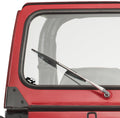
On most trips, the recovery tool you actually use is not the strap. It is the spare. That full-size tire hanging on the tailgate can spend years in the sun between flats. The U.S. Tire Manufacturers Association advises keeping tires away from heat and direct sunlight, and notes that tire age matters most for full-size spares, because they rarely wear out before they get old. A cover keeps direct sun off the tread and sidewall, and it is the one part of the packout everybody behind you on the trail gets to look at.
COVERS BUILT FOR THE TRAIL


For more on how overlanders carry and protect a spare, including hitch carriers and swing-outs, see How Overlanders Carry a Spare Tire.
Tier 3: Self-reliant
Tier 3 is for when you start traveling farther from help, or alone. This is where a portable compressor, a better rope, and real storage come in.
| Item | Price |
|---|---|
| MADDOX 12V 125 PSI High-Performance Inflator | $149.99 |
| BADLAND APEX 1 in. x 30 ft. Kinetic Recovery Rope 29,000 lb. breaking strength; in-store only |
$119.99 |
| BADLAND APEX 24,000 lb. Forged Snatch Block | $49.99 |
| APACHE 4800 Weatherproof Protective Case, X-Large | $59.99 |
| MIDWEST CAN 5 Gallon Jerry Gas Can | $69.99 |
| Tier total | $449.95 |
The compressor comes first in this tier. Airing down makes a huge difference in sand, mud, and rock. Airing back up at the trailhead is what lets you drive home at highway speed without cooking a tire. The kinetic rope is the upgrade to your Tier 1 strap. It is stronger, easier to coil, and often on sale, so it is worth watching for. A snatch block doubles as a way to change the angle of a pull, and it is the first piece you will want if a winch comes later.
Speaking of which: a winch is the natural next step, and it is intentionally not on this list. A winch is a several-hundred-dollar purchase that also needs a mount and wiring. Get the Tier 1 kit, go out with friends, and you'll quickly know whether you are the kind of traveler who needs one. For the rope side of that decision, read Steel vs Synthetic Winch Rope.
What to skip, at least for now
- The high-lift farm jack. On a lifted rig, jacking from the bumper extends the suspension before the tire comes off the ground, and it takes training to use safely. A bottle jack does the tire-change job better for most people.
- Chains and tow balls as recovery gear. Chains do not stretch, and tow balls are not rated for recovery loads. Neither belongs in a pull.
- Modified sine wave inverters. If you plan to charge or run sensitive electronics, look for pure sine wave instead.
- Any power station you have not researched. Read recent owner reviews before you spend that kind of money, regardless of the brand on the box.
Budget gear is better than no gear. Start with Tier 1, learn how to use it before you need it, and upgrade the pieces that wear out. That is how most good kits get built. If you are also looking at where the rest of the budget goes, 10 Expensive Jeep Upgrades and the Cheaper Alternatives covers the vehicle side, and Where Is Overlanding Legal? will help you find a free place to use all of it.
Frequently asked questions
Is Harbor Freight recovery gear good?
For a beginner kit, yes, as long as you buy pieces that are labeled with a working load limit and you inspect them before every trip. Their BADLAND snatch strap publishes a 10,000 lb. working load limit, and that label is the line between rated gear and a strap of unknown strength. Upgrade to premium pieces as they wear out or as your recoveries get harder.
What recovery gear do I need to start overlanding?
At minimum: a stretch-rated recovery strap, two 3/4 in. D-ring shackles, a way to connect at the rear if your rig has no rated recovery point, a tire plug kit, a tire gauge, gloves, and a shovel. That covers the common vehicle-to-vehicle pull where a friend drives you out.
Can you do recoveries without a winch?
Yes. Most stuck situations on a group run end with a strap pull from another vehicle, a shovel, and some air let out of the tires. A winch matters when you travel alone or when nothing can pull you out, which is why it sits at the end of this list rather than the start.
How do you overland on a budget?
Spend first on the gear that gets you home: recovery, tire repair, and safety. Use what you already own for camp, like a cooler, blankets, and a stove from the garage, and only replace it once you know what you actually use. A $250 recovery kit and a weekend at a free dispersed site is a real trip.
Should I buy a high-lift farm jack for overlanding?
Not as a first purchase. On a lifted rig, jacking from the bumper stretches the suspension before the tire leaves the ground, and a farm jack takes practice to use safely. A bottle jack sized to fit under your axle is cheaper, smaller, and easier to control.
0 comments