



Most decal roundups pick designs. That is the wrong first question for a rig that actually leaves pavement.
On a used Jeep, placement matters more for survival than design. A graphic on the lower rocker lives a completely different life than the same graphic on a hardtop window. So this list is organized by panel, worst case to safest, with what works in each spot and what to avoid.
The trail damage map
Before choosing anything, know which panels take what. Roughly, from most abused to least:
| Panel | What hits it | Decal verdict |
|---|---|---|
| Rockers, lower doors | Rock spray, boot scuffs, brush | Use vinyl as a sacrificial layer, expect to replace it |
| Fenders and vents | Brush, thrown gravel, gear scrapes | Good spot. Small graphics survive well |
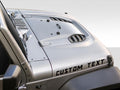
| Hood | Stone chips, and the worst UV on the vehicle | Excellent, and it earns its keep beyond looks |
| Tailgate and spare | Dust, occasional pack-out scuffs | Very safe, high visibility |
| Windshield corners, hardtop glass | Almost nothing | The safest surface on the vehicle |
If you take one thing from this article: put the graphics you would be sad to lose on glass and vertical panels, and treat anything below the door line as consumable.
1. Hood graphics: the ones that do a second job
The hood is the most chip-prone painted panel and takes more direct UV than anything else on the vehicle, because it is horizontal. A blackout or full-hood graphic covers the stone-chip zone, and it cuts glare bouncing off the hood into an upright Jeep windshield on a bright trail.
That second benefit is real and rarely mentioned. Anyone who has driven into low sun with a light-colored hood knows the problem.


2. Fender and vent decals: small, protected, and cheap to redo
The fender vents on a JL or JT sit in a recess, slightly shielded from direct brush contact, which makes them one of the better places on a trail rig for a graphic you want to keep looking sharp. They are also small, so replacing one after a hard season costs very little.


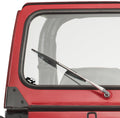
3. Windshield corner decals: the safest real estate you own
Glass takes almost no abuse compared to paint, and the lower corners of a Jeep windshield are out of the wiper path and out of your sightline. It is the single most protected surface for a graphic on the whole vehicle, which is why the corner Easter egg decals have become a Jeep tradition of their own.
They also survive doors-off and top-off driving, which most body graphics cannot claim.

4. Tailgate and spare tire: the panel everyone behind you reads
The tailgate is the most-viewed surface on your Jeep and one of the least abused. It takes dust and the occasional scrape from loading gear, and that is about it. Heritage lettering like the vintage 4 Wheel Drive stencil belongs here; we wrote up where that stencil actually came from if you want the history.

5. Rockers and lower body: plan to replace, not to preserve
Below the door line is where the trail wins. Rock spray, boot scuffs climbing in, and brush on tight lines all land here. That is not an argument against graphics down low, it is an argument for treating them as a sacrificial layer: vinyl takes the hit instead of your paint, and when it looks beaten you peel it and lay a fresh one on undamaged paint underneath.
What material actually matters
Our cut decals are ORACAL 651, a calendered vinyl with a permanent adhesive, cut in our own shop in South Carolina. Printed designs use ORAJET 3551RA with a clear laminate over the ink.
Durability depends on the color, not just the film, and we would rather say so than quote one number for everything. The full breakdown is in which decals hold up best in all weather. The short version for a trail rig: solid standard colors last longest, metallics carry a shorter rating, and horizontal panels age faster than vertical ones.
Three mistakes that cost people graphics
- Installing in the cold. Adhesive needs warmth to grab. A decal applied on a freezing morning is already failing.
- Not sealing the edges. Failure almost always starts at an unsealed edge, then a brush or a pressure washer finds it. See our installation mistakes guide.
- Automatic brush washes. Those brushes carry the grit of the last hundred vehicles and will find any lifted corner.
Frequently asked questions
Do decals survive off-roading?
Yes, when you choose the panel sensibly. Glass, tailgates, hoods and fender vents all hold graphics well through regular trail use. Below the door line, treat vinyl as a sacrificial layer that protects paint and gets replaced when it looks beaten.
Where is the safest place to put a decal on a Jeep that gets used?
The lower corners of the windshield and the hardtop glass. Glass takes almost no abrasion compared to paint; those areas sit out of the wiper path, and they survive doors-off and top-off driving.
Will trail brush scratch through a vinyl decal?
Brush pinstriping can scratch vinyl the same way it scratches clear coat, but the vinyl takes the damage instead of your paint. That is the point. Replacing a fender decal costs a fraction of refinishing a fender.
Do I need special decals for off-road use?
No. The same quality cut vinyl works; what changes is where you put it and how you install it. Sealed edges and a warm, properly cleaned surface matter far more on a trail rig than any special product.
Can you take a decal off without hurting the paint?
Yes, with heat and patience. Paint under a quality decal is usually better preserved than the exposed paint around it, since the vinyl has been absorbing the UV. Our removal guide covers the method.
Built for rigs that actually get used
Precision-cut decals from a veteran-owned shop in South Carolina, cut to order in house and made in the USA.
Shop all decals ›
0 comments