



You picked a color online, it looked perfect on your screen, and the graphic that showed up looks a little different in person. On a full-color printed graphic, that is not a printing mistake. Screens and printers build color in two fundamentally different ways, and a small shift between the two is normal, expected, and unavoidable with current technology.
Before going further, it is worth separating the two very different things we make, because only one of them is printed at all.
In this article
- Cut vinyl and printed vinyl are not the same problem
- RGB versus CMYK, the short version
- Why some colors shift more than others
- Your own screen is part of the problem too
- What to do if color accuracy really matters
- FAQ
Cut Vinyl and Printed Vinyl Are Not the Same Problem
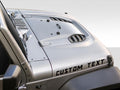
Cut vinyl decals are not printed. They are cut from solid colored ORACAL 651, where the color is the film itself. No ink touches them, no artwork is converted to CMYK, and there is no press to shift the color. If you order Traffic Blue 651, you receive Traffic Blue 651, exactly the same film every other Traffic Blue order gets. The RGB to CMYK problem described in the rest of this article simply does not apply to a solid cut decal. If you want the full rundown on that film, we wrote one: what ORACAL 651 vinyl is and how it is used for Jeep decals.
Cut vinyl does still have a color question, but it is a different one: a color swatch rendered on your screen is not the physical film. Your monitor is showing you a photograph or a digital approximation of a vinyl color, and no screen can show you exactly how that film looks in daylight on your Jeep. The fix for that is not color management, it is holding the real thing, which is why we sell an inexpensive physical swatch.
Printed graphics are a different animal. Full-color designs are printed on ORAJET 3551RA and sealed with a protective laminate, printed and finished right here in South Carolina, much of it on our Roland TrueVIS SG3-540 eco-solvent printer. That process really does involve converting screen color into ink, and that is where a genuine shift can happen. If you are curious how the whole thing comes together, we walk through it in how custom Jeep decals are made.
RGB Versus CMYK, the Short Version
Your screen builds color out of light. Red, green, and blue pixels glow at different intensities and mix together, which is why it is called RGB. Because light is additive, adding more of it makes the result brighter, and that lets a screen produce an enormous range of intensely saturated colors, including plenty that cannot exist on a physical printed surface.
A printer builds color out of ink instead of light, using cyan, magenta, yellow, and black, which is why it is called CMYK. Ink is subtractive: it absorbs light rather than emitting it, so mixing inks together always makes a color darker and duller, never brighter. That is the core mismatch. The two systems physically cannot produce an identical range of colors, so some screen colors fall outside what ink can reach, and converting them always involves a compromise.
Why Some Colors Shift More Than Others
Not every color shifts equally. Bright saturated oranges, greens, and blues are the usual trouble spots, along with neons, hot pinks, and electric purples. Those colors sit in a part of the range a glowing screen reaches easily and ink cannot reach at all. When one of them is converted for printing, the printer substitutes the closest color it can physically produce, which is usually a little more muted than what you saw lit up on your phone.
Reds, blacks, and most earth tones convert far more predictably, because they sit well inside what both systems can reproduce. If a close match matters more to you than a specific electric shade, those are the safer choices.
Your Own Screen Is Part of the Problem Too
Even before any conversion to ink happens, two screens rarely agree with each other. Panel type, brightness, whatever color profile the device shipped with, and the ambient light in the room all change how a color reads. A phone held at full brightness outdoors and a laptop in a dim room can show the same file noticeably differently. That is why the same product photo can look one way on your phone and another on a monitor, and why nobody can honestly promise your screen is showing you the printed color exactly as it will arrive.
Color management, calibration, and good print profiles narrow the gap. They do not close it. Anyone promising an exact screen to print match is overselling.
What to Do If Color Accuracy Really Matters
- For a solid cut decal, order a physical swatch. This is the only real answer to "will this color look right on my Jeep." It costs a dollar and change and it removes the guesswork completely.
- For printed designs, favor reds, blacks, and earth tones over neons and electric brights if a close match matters more to you than the specific shade.
- View product photos on more than one device before ordering, since a single screen is not a reliable reference on its own.
- Expect a small, normal shift on bright, highly saturated printed colors specifically. That is not a flaw in your print, it is a limit of what ink can physically do.
- Ask us. If a specific color is critical to your build, message us before ordering and we will tell you honestly how well it prints.

Hold the actual film in your hand and compare it in daylight before you commit to a color.
Our own printed graphics, such as full-color printed and laminated decals, are produced with ink on a physical surface, so the RGB to CMYK reality applies to them. Printed products made for us by outside manufacturers, including tire covers and sunshades, are also printed with ink, so the same basic limits apply there as well. Solid cut vinyl remains the outlier, because nothing about it is printed.

Full-color printed and laminated designs for Wrangler and Gladiator, printed to order. These saturated tropical colors are exactly the kind that shift most.
FAQ
Why doesn't my printed decal match the color I saw online?
Screens build color with light (RGB) and printers build color with ink (CMYK). Light is additive and ink is subtractive, so the two systems cannot produce an identical range of colors. A small shift is normal on bright, highly saturated colors and is not a printing error.
Does this affect cut vinyl decals too?
No. Cut vinyl decals are not printed at all. They are cut from solid colored ORACAL 651, so the color is the film itself and no artwork is ever converted to CMYK. The only color question on cut vinyl is that a swatch on a screen is not the physical film, which is why ordering a real vinyl sample swatch is the reliable way to check a color.
Which printed colors are most likely to look different?
Bright saturated oranges, greens, and blues shift the most, along with neons, hot pinks, and electric purples, because they exist in a range screens can display but ink cannot fully reproduce. Reds, blacks, and earth tones convert far more predictably.
Can you guarantee an exact color match?
No, and nobody honestly can. Calibration and good print profiles narrow the gap between screen and print but cannot close it. If a color is critical, order an Oracal 651 vinyl sample swatch for cut colors, or message us before ordering a printed design and we will tell you how well that color prints.
How should I check a color before I order?
Order a physical swatch for solid cut vinyl, view product photos on more than one device rather than trusting a single screen, and lean toward reds, blacks, and earth tones on printed designs when a close match matters more than a specific electric shade.
Browse Printed and Cut Vinyl Designs
From solid cut vinyl to full-color printed graphics, made to order for your Jeep or Bronco. Free shipping on orders over $59.99, and decals ship within 7 business days.
Shop Decals
0 comments